
communication that moves YOU forward
ADULT SPEECH PATHOLOGY PROFESSIONALS
Evidence-based communication & learning services offered in clinic and home settings (including telehealth)
Locations: North Strathfield & Zetland
NO REFERRAL NEEDED | Registered NDIS Provider

SUPPORTING ADULTS
Here are some of the most common reasons adults visit our clinic along with how we support each area of concern.
COMMON adult therapy focus areas
STROKE or BRAIN INJURY
Support speech, language and memory after neurological events.
SOCIAL COMMUNICATION
Help develop conversation skills, turn-taking and understand social cues.
NON-VERBAL/MINIMAL VERBAL COMMUNICATION
Support communication through alternative methods such as visuals, gestures or communication devices.
LANGUAGE DEVELOPMENT
Assessment and therapy to support understanding and expression of language, helping individuals communicate effectively across home, work and community settings.
COGNITIVE or COMMUNICATION DIFFICULTIES
Challenges with memory, attention, problem-solving or word finding.
VOICE
Hoarseness, vocal fatigue, voice loss or strain in individuals with high professional voice use including teachers, presenters, performers and public speakers
SPEECH SOUNDS
Support clear and accurate pronunciation to be better understood by others.
FLUENCY (STUTTERING)
Build smoother and more confident speech when talking.

NDIS PARTICIPANTS

WE ARE A NDIS REGISTERED PROVIDER
✓ Speech therapy tailored to your NDIS goals
✓ Suitable for self-managed, plan-managed, and NDIA-managed plans
✓ Support communication at home, clinic or via telehealth
✓ Clear communication, guidance and support
✓ Help navigating the NDIS and understanding plan
CLIENT SATISFACTION

✓ Personalised, focused care
✓ Experienced and compassionate clinicians
✓ Clear guidance for family members
✓ Combined therapy acceleration
WHY CLIENTS CHOOSE US
WIDE VARIETY
Our Services
We offer our services in the clinic and at home. We also offer telehealth services, including phone and video sessions.
-
We offer comprehensive speech assessments designed to identify and understand each individual’s communication and literacy needs.
Our qualified speech pathologists evaluate speech clarity, language development, social skills, voice, and fluency using evidence-based tools and a supportive, client-focused approach.
Our assessments provide clear insights and practical recommendations, helping to guide effective therapy and build confidence in communication.
-
Speech is the way we make speech sounds, put sounds together, and hear and think about speech. People who have trouble with their speech may have difficulty with consonants and/or vowels which are hard for others to understand.
Different types of speech difficulties can include: Dysarthria, Speech Sound Disorder, Phonological Disorder or Articulation Disorder.
-
Receptive language refers to how we understand spoken and written information. Adults with receptive language difficulties may find it hard to follow conversations, understand instructions, process complex information, or keep up during conversations at work or in social settings.
Expressive language refers to how we use words and sentences to share thoughts, ideas, and needs. Adults may experience difficulty finding the right words, forming clear sentences, explaining ideas, telling stories, or participating confidently in conversations.
At Speech Mark, we provide assessment and personalised therapy to strengthen both understanding and expression. Our goal is to help adults communicate more clearly, participate confidently in conversations, and function effectively across work, social, and everyday environments.
Language challenges may be associated with conditions such as acquired brain injury, stroke, neurological conditions, developmental language difficulties, autism, ADHD, or may occur independently. Therapy is tailored to each individual’s goals, lifestyle, and communication demands. -
Stuttering is where the flow of speech is interrupted. The types of interruptions can be repeating sounds (e.g., m…m…my), repeating words (e.g., when…when…when), prolonging or ‘stretching out’ sounds (e.g., mmmmmum) or getting ‘stuck’ where no sound is coming out. People who stutter may also experience non-verbal behaviours such as body movements, facial grimacing etc.
-
This is how people use verbal and non-verbal skills to communicate messages such as eye contact, topic maintenance, negotiation and other conversational skills.
-
Literacy skills include reading, writing, spelling, and understanding written information used in everyday life. Adults may experience difficulty with reading accuracy, reading speed, comprehension, written expression, spelling, or organising thoughts clearly in written form.
Challenges with literacy can impact confidence and participation across work, study, and daily tasks such as completing forms, writing emails, reading instructions, or managing documents.
At Speech Mark, we provide assessment and tailored therapy to strengthen functional literacy skills for real-world settings. Therapy may focus on reading comprehension, written communication, spelling, organisation of ideas, and strategies to support workplace, study, and independent living.
Literacy difficulties may be associated with dyslexia, developmental language difficulties, learning difficulties, acquired brain injury, neurological conditions, or may occur independently. Support is practical, goal-focused, and individualised to each person’s needs and lifestyle. -
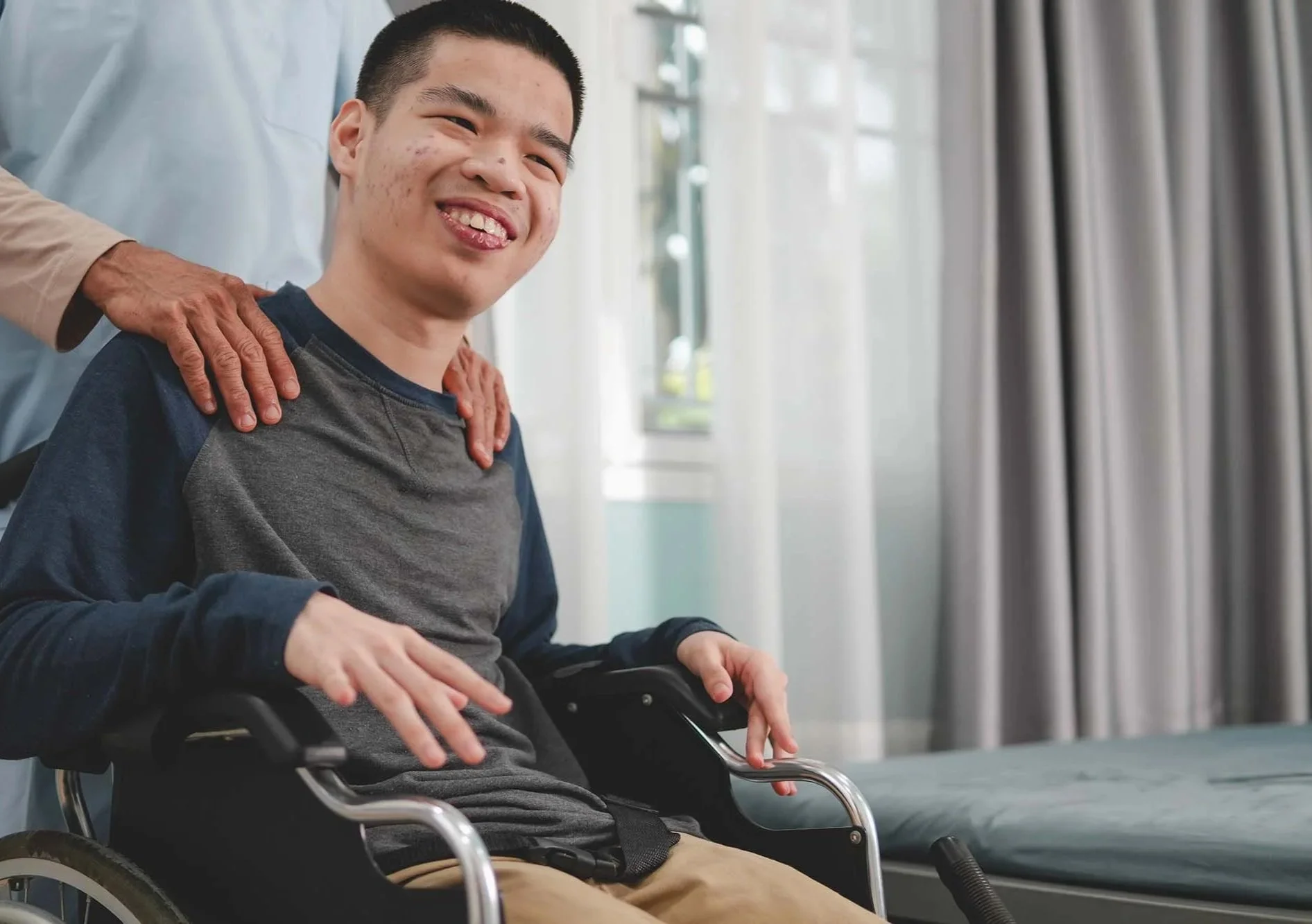
This includes but not limited to Autism Spectrum Disorder (ASD), Intellectual Disability, Down Syndrome, Cerebral Palsy and other disabilities.
People with disabilities may experience difficulties with their communication such as language skills and social skills.
We work on empowering people by helping them access early intervention support and also by enhancing their communication, social and community skills. In addition, we link people with external support and services when required such as Occupational Therapy, ABA therapy or other therapy programs.
-
We offer a unique tutoring service that integrates speech pathology with targeted educational support through a collaborative, transdisciplinary approach.
Our tutoring is designed for adolescents and adults who need support with communication, comprehension, reading, writing, study skills, or workplace learning. Rather than separating traditional tutoring from communication therapy, we combine both to build practical skills that transfer into real-life settings.
This approach allows speech pathologists and educators to work together to strengthen language, literacy, learning strategies, and confidence. Sessions are personalised to individual goals, whether related to study, employment, professional communication, or everyday functioning.
We support adults who may be experiencing challenges with comprehension, written expression, organisation of ideas, academic tasks, workplace communication, or returning to study after time away. Our focus is functional, confidence-building, and tailored to each person’s needs and goals. -
We are proud to provide other Allied Health Services, including AHPRA Registered Practising Physiotherapists who have experience in private practice, various hospitals and community health centres.
We also direct our clients to our network of occupational therapists and psychologists when required.
-
At Speechmark, we are committed to recognising and challenging ableism in all forms. Our philosophy celebrates neurodiversity and promotes inclusive thinking across everything we do. We aim to create spaces where every individual feels seen, respected, and supported as their authentic self.
SIMPLE PROCESS
STEP BY STEP: WHAT TO EXPECT
1. Initial Consult

2. Personalised Plan

3. Therapy Sessions

4. Progress Review

MULTILINGUAL
We speak English, Mandarin, Cantonese, Arabic & Urdu!

BOOK A FREE PHONE CONSULT TODAY
Phone: 0458 482 882
Email: info@speechmark.com.au
NORTH STRATHFIELD OFFICE
Wotso, Level 1/5 George St, North Strathfield NSW 2137
ZETLAND OFFICE
Wotso, Level 1, 1-5 Link Road, 136 Epsom Rd, Zetland NSW 2017
Fill in the form below and we will get back to you as soon as possible!
